
BetBurger Review
Reviews
Service Performance & Features
Key technical specifications and pricing details for BetBurger.
BetBurger is positioned as an “arb finder” that also ships value bets and middles, with an emphasis on speed and breadth of coverage.
At this software there is a huge opportunity volume when your bookmaker mix fits, but execution friction and data freshness issues can be the real bottleneck, especially at live events.
Strengths of the Software
- Strong scanning depth + lots of markets: the scanning depth or broad market coverage is a core advantage, not just a few headline leagues are covered as at many other services.
- High opportunity volume when your bookies match: BetBurger’s large coverage (bookies + sports) is a driver of high number of arbs found. This can easily be overwhelming for unexperienced users.
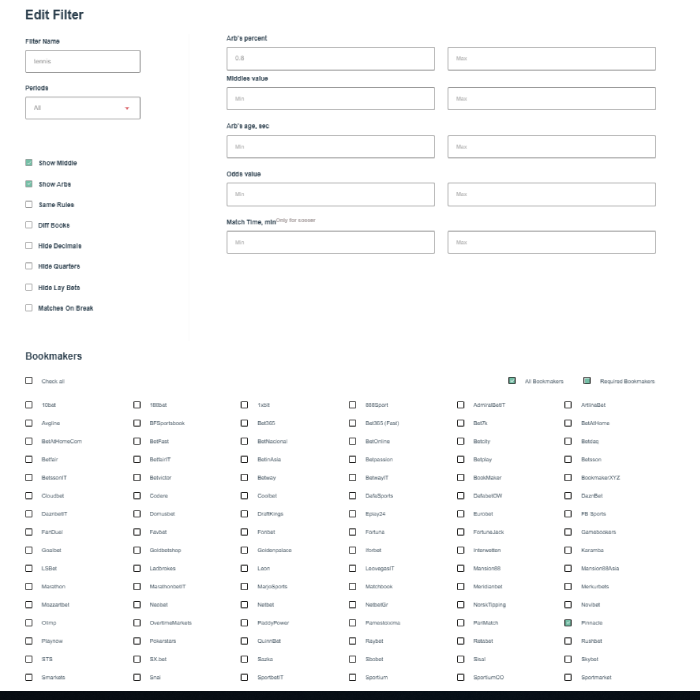
- Filters, grouping, and workflow controls built for real use: Multifilters (age/yield/sport/bookmaker/league, etc.), grouping arbs by event, hiding arbs, and notifications are built in a way that pro users will find niche markets easier.
- Built-in calculator features that reduce human error: the surebet calculator with stake rounding, per-bookie currency, and odds comparison/auto-update options is built in a way so the chance of making human error is reduced.
- One-click redirects can materially improve speed (for some bookmakers): the “direct” button pre-configures the bet smoothly even for Bet365, which is the ideal execution experience.
- Support for exchanges / integrations: Betfair and Smarkets, which are useful if your strategy includes exchange legs (where legal and allowed) are integrated with personalized commission rate input fields.
- Flexible access options (including short durations and account freezing): the ability to freeze the account up to 28 days/year comes handy if you’re seasonal or rotating strategies. It can also be a huge help when planning a vacation or not being able to place arbs/value bets for a few days.
Weaknesses of the Software
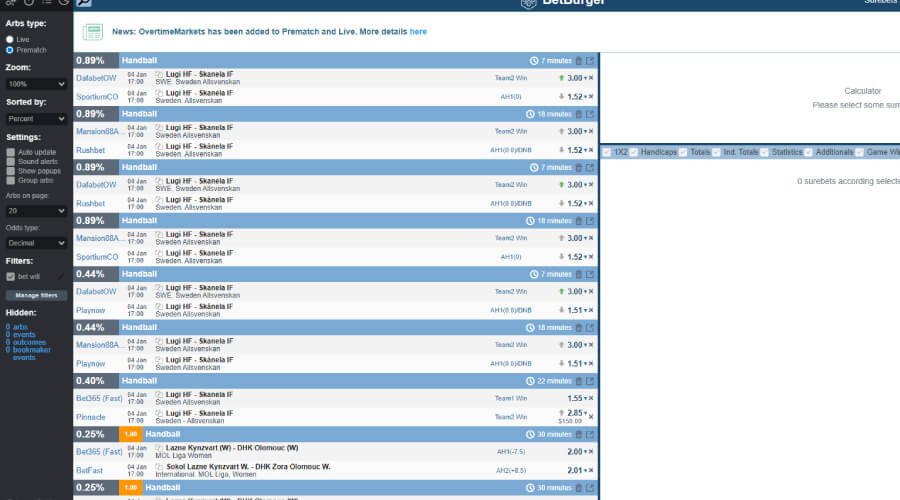
- Crowded UI / readability learning curve: Many users complain that the interface can feel dense at first, and odds comparison clarity could be improved. That’s not just aesthetics, clarity reduces stake/order mistakes.
- “Ghost arb” / stale opportunity risk: Invalid opportunities can sometimes remain visible longer than they should. If you click fast without independently verifying, this can translate into slippage or unintended exposure.
- Direct-link execution isn’t consistent across bookmakers: Some books don’t reliably pre-fill the bet slip via redirect, which slows execution and makes live arbing much harder.
- Value-bet results are not guaranteed and can feel noisy: Value-bet models can look great on paper but still swing due to variance, small-market volatility, and odds movement. Treat it as probabilistic, not as “print money.”
Main target audience
Who it’s for
- Intermediate to advanced bettors who already understand settlement rules (voids/pushes/overtime rules, market exclusions), and who can execute quickly across multiple licensed bookmakers.
- Semi-pro workflows where time efficiency matters: you’re trying to turn “found arb” into “placed correctly” with minimal friction.
- Given the fairly high monthly subscription price of BetBurger (compared to similar services), bettors need to have a decent access to bookmakers and they also need to invest multiple hours in using the software.
How they can use it well
- Use it to identify opportunities, then verify: check the exact market (same bet type), rules, and current odds before staking.
- Treat live as a specialist mode: only worth it if your bookmaker mix accepts bets quickly and your process can handle rapid price changes.
Who should be cautious
- Beginners, tiny bankroll users, or anyone who can’t access multiple regulated books: software cost + execution errors + limits can overwhelm theoretical edge.
- Bettors who don’t have a deep understanding about arbing and value betting will struggle to place any bets using BetBurger
- Many users can see the odds feed displayed as too much or even full with errors. However, this happens because of the fast odds scanner BetBurger has. They catch many odds discrepancies between bookies because some of them get and update odds 1-5 sec later compared to faster bookies. This situation creates fake/not existing arbing opportunities.
Betting site coverage
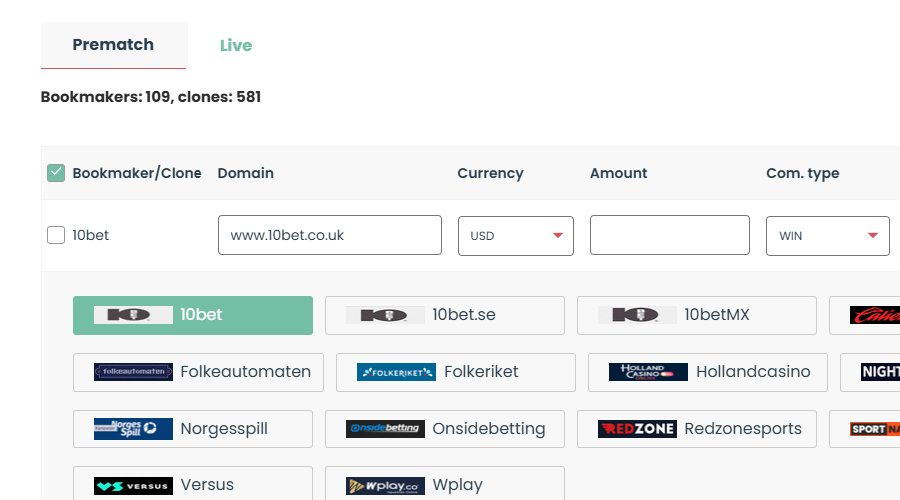
Published coverage varies depending on whether counts are reported as bookmakers, lines, or clones/mirrors (sites that share the same underlying odds feed).
- One commonly cited snapshot: Prematch ~140 lines (82 bookmakers + 58 clones) and Live ~120 lines (66 + 54 clones), across ~27 sports.
Other materials sometimes cite different sport counts (e.g., low/mid 30s), which likely reflects counting method and ongoing additions/removals. Practical takeaway: don’t buy based on headline totals. The only number that matters is: does it cover the exact bookmakers you can realistically use in your jurisdiction, with acceptable speed and reliability?
Pricing Plans
Typical structure:
- Free tier: limited feed (e.g., very low-profit arbs up to ~1%) and restricted functionality.
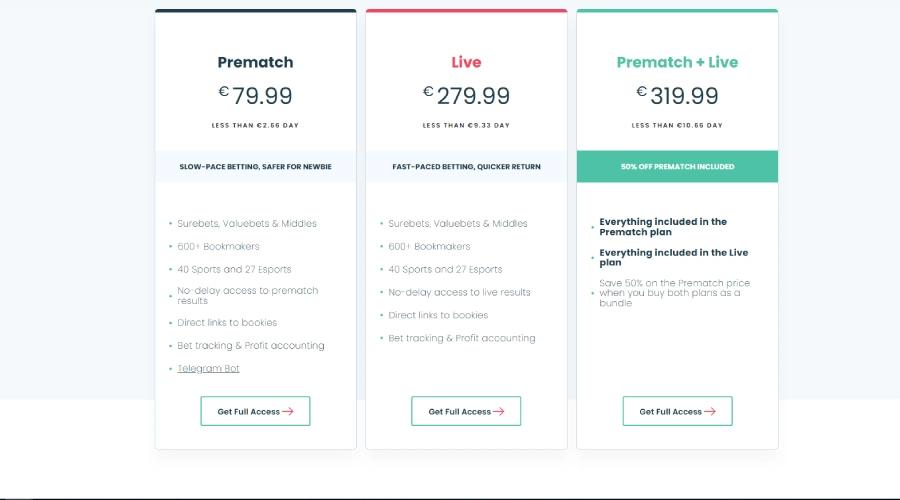
Prematch: €79.99 / 30 days
Live: €279.99 / 30 days
Prematch + Live bundle: €319.99 / 30 days
Multiple durations are typically offered (1/7/30/180/360 days).
There’s also mention of subscription freezing (useful for downtime).
Reality check: your break-even isn’t “ROI × number of arbs.” It’s after slippage, stake caps, partial fills, voids, and time cost.
Best alternative sites (and when they’re better)
- Better for: people who prioritize a cleaner workflow and more “defensive” tooling over maximum sport breadth.
- Better for: budget-conscious prematch-only users who don’t need live arbing and want a simpler entry point.
- BetOnValue
- Better for: bettors whose core strategy is value betting first, rather than pure surebet volume.
- Better for: users primarily operating in US/AU-style bookmaker ecosystems and wanting an alerts/ecosystem approach tailored to those markets.
- Better for: tool diversification (having a second data feed/provider can reduce reliance on any single scanner when speed/quality fluctuates).
Bottom line
BetBurger’s biggest upside is coverage + opportunity volume + tools that can speed up a disciplined workflow. Its biggest downside is that execution realities (stale entries, UI density, bookmaker-specific redirect quirks, and live slippage) can wipe out theoretical edge if you’re not strict about verification and process.