
Breaking Bet Review
Reviews
Service Performance & Features
Key technical specifications and pricing details for Breaking Bet.
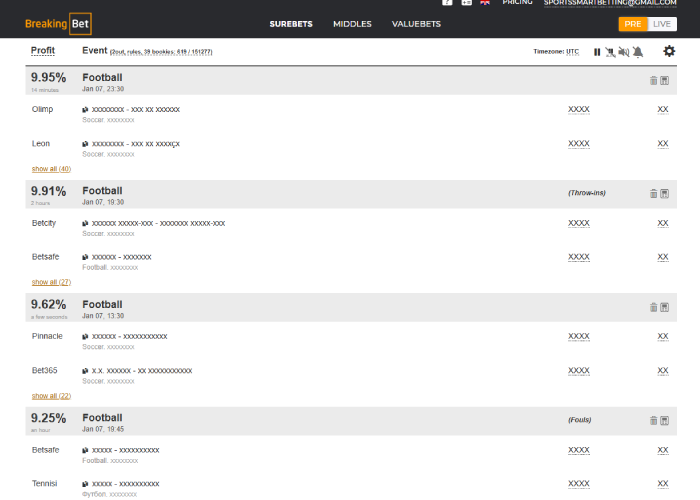
BreakingBet is a scanning platform focused on surebets (arbs), value bets (EV+), and middles across prematch and live markets. It positions itself as a utility: scan lots of books fast, filter hard, then help you get to the bet placement screen quickly (optionally with browser automation).
Strengths of the Software
- Covers all three core “edge-finding” modes in one place: surebets + value bets + middles, available in prematch and live workflows.
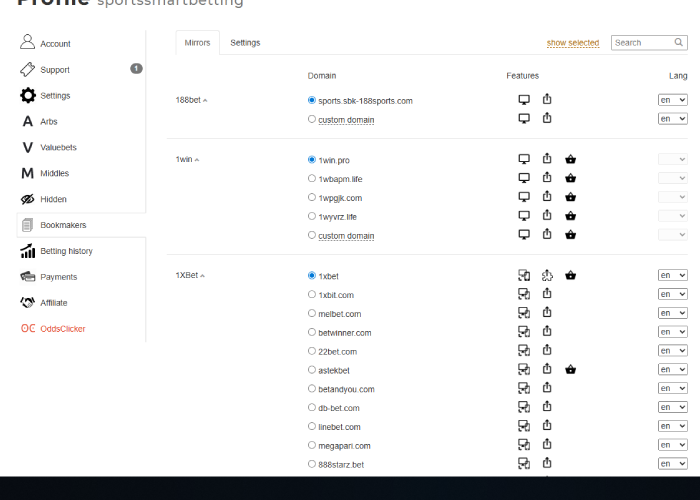
- Large book coverage signal: the homepage advertises 310+ sites, and there’s also an extensive “clones and mirrors” list (useful if you operate in regions where brand mirrors are common).
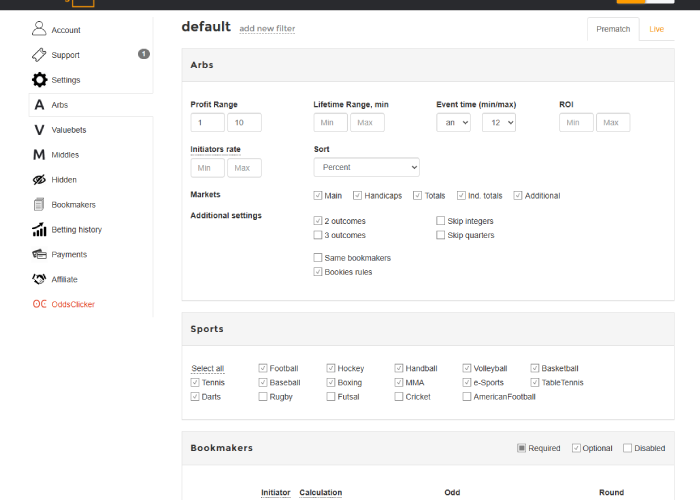
- Sports breadth is broader than many arb-only tools: it lists 15–16 sports (football, tennis, basketball, hockey, MMA, esports, etc.), which helps if you don’t want to be locked into one sport’s liquidity cycle.
- Built-in calculators + workflow cues: it highlights a calculator for each arb/valuebet/middle and references “odds vector change / initiator” style indicators, practically, those are the kinds of small UX touches that reduce mis-clicks under time pressure.
- Filtering is designed for speed and survivability: filters include profit range and “lifetime” (minutes in prematch, seconds in live), which is exactly how experienced arbers triage what’s still realistically executable.
- Rule-mismatch mitigation exists (important in real life): they explicitly discuss different settlement rules across bookmakers and mention a “take into account the bookmaker’s rules” function to reduce bad matches (this is a common hidden leak for new arbers).
- Optional automation layer (OddsClicker): there’s a browser extension aimed at getting you from scanner → bookmaker event quicker, including “add to betslip” actions and proxy configuration per bookmaker.
- Basic record-keeping tools exist: it promotes bet history/analytics, per-site income charts, and CSV export, useful if you treat this like a process and not a “hunt.”
- No automatic renewals (some people prefer this): tariffs page says purchases are manual (no auto-charges), which reduces the risk of “oops I forgot to cancel.”
Weaknesses of the Software
- Some marketing framing is overly confident: pages describe surebets as “risk-free,” but in practice execution risk remains (odds move, max stakes change, legs get rejected, rules differ). The platform itself acknowledges rule differences, which is basically admitting the real-world fragility.
- Automation adds another failure surface: OddsClicker can save seconds, but browser extensions + proxies + multiple books can create stability issues and extra operational complexity (and their install notes warn about extension stability considerations).
- “Negative arbs” are a foot-gun for beginners: they’ve introduced negative arbitrage down to around -3%. That can be a deliberate tool in specific workflows, but it’s not a beginner-friendly feature, if you don’t know why you’re taking negative ROI, you probably shouldn’t.
Main target audience (who they are, how they can use the service)
- Arbitrage-focused bettors (18+) who want prematch + live scanning, and who can execute quickly across multiple books.
- Hybrid “arb + value + middle” operators who prefer one platform for multiple strategies, instead of paying for separate tools.
- People in markets where book “mirrors/clones” matter, since the platform explicitly supports redirecting to events on many clones.
How to use it well (risk-aware): lean heavily on filters (profit + lifetime + rules), focus on fast-to-execute markets, and track errors/voids so you can tighten your process over time.
Betting site coverage
- Advertised as 310+ sites on the main page.
- The “clones and mirrors” section lists a very large set of brands and mirrors, including major names and exchange references (e.g., Betfair exchange appears in the list), which suggests they’re actively maintaining redirect/coverage logic.
(As always: “coverage” only matters if it matches the books you can legally access, fund smoothly, and keep usable limits on.)
Pricing Plans
BreakingBet organizes subscriptions by mode and duration: Prematch, Live, or Prematch + Live, purchased for a chosen number of days.
Because the official tariffs page appears to render pricing dynamically, third-party pricing snapshots commonly show structures like:
- Prematch (7/30/90/180/365 days)
- Live (7/30/90/180/365 days)
- Prematch + Live (7/30/90/180/365 days)
…with “renewal” prices listed for active subscribers, plus notes about payment methods and the ability to suspend a subscription for a period.
The price range is €5 – €31 based on the scan timing and subscription plan length chosen.
If you’re comparing tools, treat any specific prices as time-sensitive (promos and currency views change) and verify at checkout.
Best alternative sites (what they’re better for, and why)
- BetBurger: Often preferred when you want a very mature surebet scanning ecosystem and a long track record of arb-focused tooling (especially if your workflow is pure arbs).
- Surebet.com: Better if your priority is a classic scanner at a lower price point, and you don’t need automation layers.
- OddStorm: Better if you’re heavily football/soccer-centric and want a platform historically built around that niche (and you accept premium pricing).
- RebelBetting: Better when your main approach is value betting (+EV) with a model-driven workflow rather than primarily arbs.
- OddsJam: Better if you want a broader odds screen + EV tooling ecosystem (especially in U.S.-style sportsbook environments), rather than an arb-first operator console.